
Your client says "I need a new brand." You say yes. Then what? Most freelance designers and small studios jump straight to sketching logos. The ones that keep clients and get referrals have a structured process that starts long before anyone opens a design tool and ends with a clean file handoff that leaves nothing to chance.
This template is that process. Eight phases take a branding project from initial client onboarding through creative brief, discovery, design, client review, revisions, and final delivery. Every phase has specific tasks with checklists and descriptions that tell you what to do and why. It is not a generic project board. It is a branding agency playbook.
What is in this template
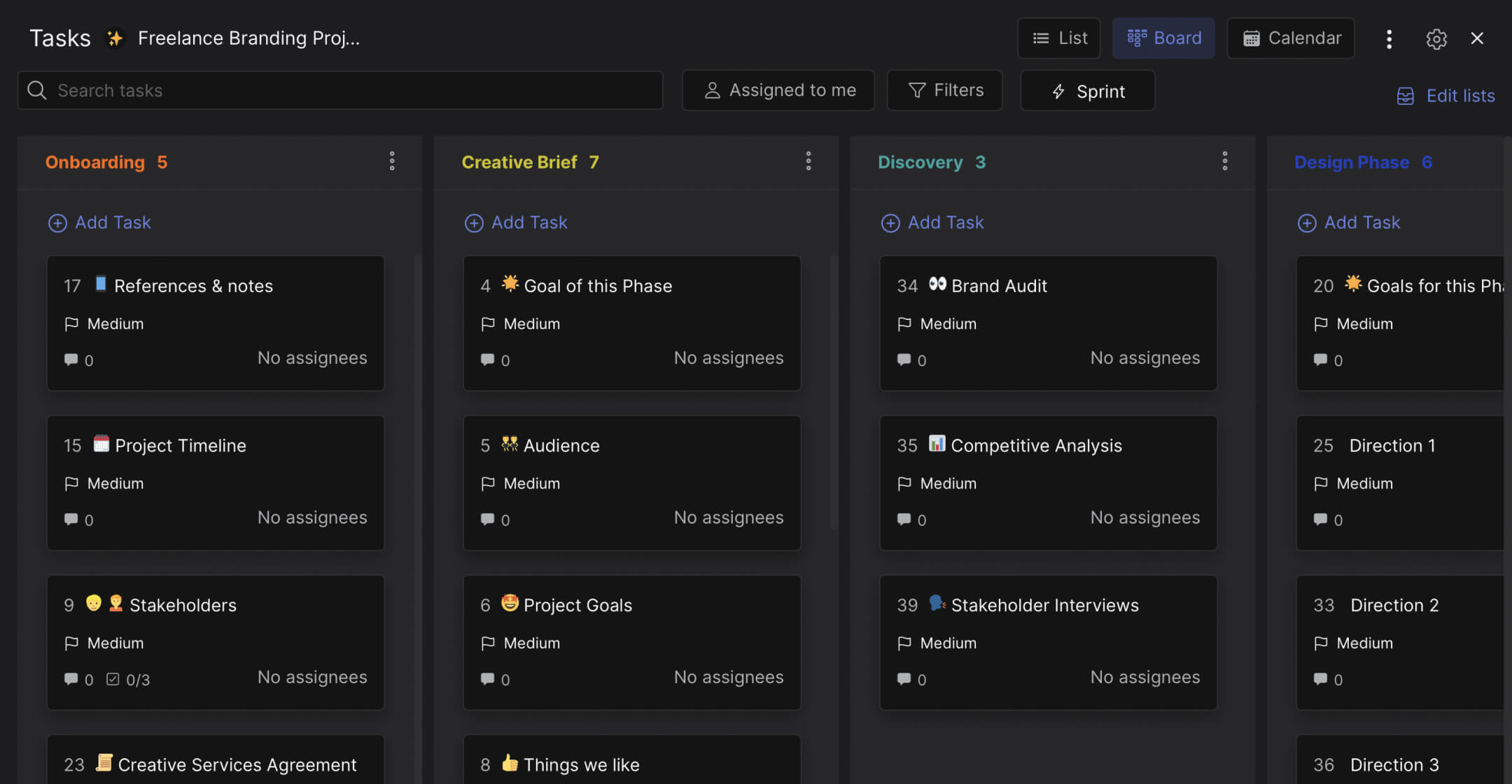
The board has eight columns following the complete lifecycle of a branding project.
Onboarding. Before any creative work starts: identify key stakeholders and who has final sign-off, get a creative services agreement signed, collect the deposit, set the project timeline, and document any existing references or notes from previous conversations. Getting paid before work begins and having a signed agreement protects both sides.
Creative Brief. This is where alignment happens. Six cards cover: defining the target audience, setting project goals ("create a brand that conveys luxury" or "develop an identity that resonates with eco-conscious consumers"), documenting things the client likes (with reference images), things they are not a fan of, and the most important question on the board: "If we did a really bad job on this project, what would that look like?" The final card confirms the client has read and approved the brief, including aesthetic preferences and goals. Move forward only after sign-off.
Discovery. Research before design. A brand audit of the current state, competitive analysis of other players in the space, and stakeholder interviews with anyone who has influence on the project. This phase prevents designing in a vacuum.
Design Phase. Time to push pixels. The template structures this around three distinct logo directions (not one), an internal huddle for peer critique before showing the client, and external testing through preference tests with impartial viewers. Never present work that only you have seen.
First Client Review. The presentation meeting. Cards for presentation details (who presents, who attends, date), positive feedback, negative feedback, concerns, and agreed next steps. Structuring feedback into categories prevents the "I just don't like it" dead end.
First Round of Revisions. Document what changed and what the next iteration addresses.
Client Review. Present revisions and start finalizing. This is the "let's see where we landed" call.
Final Handoff. Specific deliverables: color palette, .ai/.eps logo files, .png logo files (color and black and white), .jpg logo files (color and black and white), and approved typefaces with links to foundries or attached font files. No guessing about what formats were delivered.
"Design is not just what it looks like. Design is how it works. And how it works starts with how you manage the project." - Mike Monteiro, Author, Design Is a Job
Why "what would failure look like?" is the most important card
Most creative briefs ask what the client wants. This template also asks what the client fears. That distinction changes the entire project dynamic.
When a client says "I want something modern and clean," that could mean a thousand things. When they also say "failure would look like something that feels corporate and cold, or something my customers would not recognize as us," now you know the boundaries. You have not just a direction but guardrails.
According to PMI research, 37% of projects fail due to unclear goals. In branding, unclear goals produce unlimited revision rounds. The "what would failure look like?" card is a pre-mortem: it surfaces misalignment before anyone has invested hours in a direction the client secretly hates.
What we do at Rock: the creative brief lives in the same space where the team discusses the project. When the client signs off on the brief, that approval is documented alongside the reference images, the goals, and the failure definition. Six months later, if the client says "this is not what I asked for," you have the signed brief with their own words in the same workspace. No digging through email attachments.
"The best branding projects I have been part of all started the same way: with a brief that both sides actually agreed on before any design work began. The brief is the foundation. Skip it and you build on sand." - Debbie Millman, Host, Design Matters
Who this template is for
Best for: Freelance designers running branding projects for clients. Small design studios (2-10 people) that want a repeatable process. Agencies expanding into identity work and needing structure. Anyone who has ever delivered a logo and then spent three weeks going back and forth on revisions because the brief was unclear.
Skip this if: You are managing an internal brand refresh without an external client. The template is structured around a client relationship (deposits, agreements, presentation meetings). For internal projects, a simpler project board might work better.
Tips for running a branding project with this template
Never skip the brief sign-off. The "Make sure you're aligned" card has three checklist items: client has read and approved the brief, client has approved the aesthetic preferences, client has had sufficient input on goals and failure definition. All three must be checked before Discovery begins. This single gate prevents most revision nightmares.
Present three directions, not one. The Design Phase includes cards for Direction 1, Direction 2, and Direction 3. Presenting one logo and asking "do you like it?" creates a binary reaction. Presenting three invites a conversation about which direction resonates and why. That conversation is where the best work emerges.
"A logo is not a brand. A brand is a promise. The logo is just the most visible artifact of that promise. If your branding process does not address the promise, no amount of design talent will save the project." - Marty Neumeier, Author, The Brand Gap
Use the internal huddle before presenting to the client. The template includes an "Internal Huddle" card in the Design Phase. If you are a solo designer, get feedback from a peer. If you are a team, run a critique session. Presenting work that only you have evaluated puts all the risk on the client presentation. Good client communication starts with confidence in the work you are showing.


