Account Manager Skills That Grow Retainers (Not Just Retain Them)
Most account manager guides were written for a job that was mostly about keeping clients happy. In 2026, that is no longer enough. Account managers now own the relationship, the profit and loss of each account (the P&L), and the plan to grow the account. The skills that protect a retainer are not the same as the skills that grow one.
This is a practical 2026 guide for agencies, studios, and freelancers running client retainers. Run the widget below to see which skill to level up first. The 8-skill table after it is the full list.
Quick answer. A key account manager owns an agency's most important client relationships. In 2026 the role spans three things at once: the relationship, each account's profit and loss, and the expansion story for the account. The skills that protect a retainer are not the skills that grow one. Retention skills cover responsiveness and communication. Growth skills cover knowing the numbers, running real quarterly reviews, asking better questions, and selling the next chapter. AI now handles status emails and meeting notes, which makes the senior judgment skills more valuable. Start by learning the P&L side of every account you own.
Which account manager skill should you level up next?
Three questions. Honest diagnosis, not a personality quiz.
The 8 account manager skills that grow retainers
Most skill lists focus on relationship management. That keeps clients happy, but it rarely grows the account. Jenny Plant has trained agency account managers since the 1990s. She puts the gap in plain words:
"The account management skills required to retain accounts are DIFFERENT to those required to grow." - Jenny Plant, Founder, Account Management Skills Ltd
The table below covers the 8 skills every agency key account manager needs. Each one works two ways: how it protects the relationship, and how it grows the account.
| # | Skill | Retention lens | Growth lens |
|---|---|---|---|
| 1 | Knowing the numbers | Spot when a happy client is losing money for the agency, so renewal does not surprise you. | Know which extra work is worth proposing, and which would cost more than it earns. |
| 2 | Selling the next chapter | Clients renew when they see you thinking ahead, not only reporting what is done. | New work comes from the story you tell. Clients rarely ask for work they cannot already imagine. |
| 3 | Knowing the client's business | Trust grows when you understand their world, not only the project scope. | New ideas come from industry context the client has not said out loud yet. |
| 4 | Asking better questions | Regular questions catch problems early, before the client thinks about leaving. | Good questions show you where the next proposal should focus and what it should include. |
| 5 | Running strong quarterly reviews | A real quarterly review ends with a next-quarter plan both sides agree on. No surprises. | Quarterly reviews are the best moment to propose new work, because it fits into the client's goals. |
| 6 | Managing multiple stakeholders | If your main contact leaves, you already know the next decision-maker. | Accounts with many stakeholders need conversations with all of them. Our stakeholder communication guide covers the channel map. |
| 7 | Writing things down | Written decisions save you when people remember things differently later. | Proposals that are easy to read, without needing a meeting to explain them, get approved faster. |
| 8 | Speaking up for the client internally | When your delivery team understands why this client matters, work stays on track. | Hard to grow an account your own team treats as routine. Attention follows the way you talk about it. |
What a key account manager actually does in 2026
The textbook definition of a key account manager is "the single point of contact for a company's most important clients." That was right in 2015. It is incomplete now.
In 2026 the role is better described as three overlapping responsibilities. First, own the client relationship: the classic understanding. Second, own the account P&L: gross margin, utilization, realized versus contracted scope, renewal math. Third, own the expansion story: the future of the account, painted on purpose in quarterly reviews and proposals, not waiting for the client to ask.
An account manager who does the first two but not the third is really a senior customer success manager. One who does the first and third but not the second is a relationship lead with optimistic financials. The three responsibilities together define the modern agency account manager. David Hoos, who consults agencies on expansion, makes the economics obvious.
"For every dollar invested in expansion, you would need to spend ten to fifteen dollars on acquisition to produce the same revenue outcome. Clients don't ask for work they don't know they need. They ask for the work that's already on their roadmap." - David Hoos, Haus Advisors

Relationship owner vs P&L owner
Most agency account managers are strong on the relationship side. They run the weekly call, respond fast, and make the client feel heard. That keeps clients for months. It rarely grows them.
The P&L side is a different skill set. It starts with basic questions. Is this account making money this quarter, or losing it? How much of the promised scope are you actually delivering? Which services take more time than they earn? Is this client above or below the team's threshold for profitable work? If the account manager cannot answer these, the retainer is flying blind. The client can be happy and the account can be bleeding at the same time.
The fix is training, not hiring. Most account managers learn the numbers in their first year, when a general manager or finance lead walks them through the monthly reporting. The ones who do not end up surprised by non-renewals, unable to protect scope, and negotiating renewals from weakness.
Retention math is the forcing function. Frederick Reichheld's Bain research remains the most-cited number in the category: a 5% increase in customer retention can lift profits by 25% to 95%. Benchmarkit's 2025 report found that gross retention has drifted from 90% to 88% across the industry. Every churn signal the account manager catches early is worth more than a new client landed through referrals, which is why the pipeline board and the retention board should sit next to each other in the same workspace through referrals, which are already the cheapest acquisition channel.
The onboarding-to-expansion handoff
A key account manager does not meet a client cold. They inherit them from the 7-stage onboarding flow. What gets captured during onboarding (usually via a client brief) is exactly what the account manager uses 90 days later. The stakeholder map, the working agreement, the questionnaire answers, and the 30/60/90 calendar all feed the first quarterly review.
Weak onboarding means the account manager starts cold. The first quarterly review becomes re-discovery, the client sees work being redone, and trust erodes in the first quarter.
The short version for account managers inheriting from onboarding: read every note and review the questionnaire responses on day one. Use the 30-day review as your first real entry into the relationship, not the kickoff call. For the full stage-by-stage onboarding flow, see our client onboarding checklist, which pairs directly with this article. The Premium tier of that onboarding playbook is designed specifically so the handoff to the account manager includes stakeholder map, written working agreement, and the full 25+ question questionnaire. Everything a account manager needs to run a real first quarterly review.
Quarterly reviews that actually grow accounts
Quarterly reviews are the most important meeting in a key account manager's calendar. Most are wasted on status decks.
The failure mode is predictable. A slide on deliverables, a screenshot of analytics, a recap of milestones. Twenty minutes of recap, ten minutes of Q&A, goodbye. No decision, no plan, no expansion conversation. Four wasted meetings a year per account, across every client in the book.
A real quarterly review does three things. It reviews the business outcomes the client cares about (their numbers, not yours). It surfaces expansion opportunities in the context of their goals, and lands a next-quarter plan both sides sign. Michael Donauer, a senior account manager at Vendasta working with SMB-serving agencies, captures the bundling move that drives quarterly review expansion conversations.
"Selling point solutions takes just as much work as bundling things together, which provides a better outcome for agencies. You don't want to have to build a brand-new package every time you want to sell a package." - Michael Donauer, Senior Account Manager, Vendasta
Three quarterly review practices separate the reviews that grow accounts from the ones that just report.
Lead with client outcomes, not agency output. "Here is what is working against your goals" beats "here is what we delivered" every time. The client does not need to hear your deliverable log. They need to see their own metric moving.
Surface expansion as a natural next chapter, not a pitch. If the client's roadmap has a gap your team can fill, the quarterly review is where you say it out loud. Packaged as "this is what we see next for you," not "here is an upsell."
End with a signed next-quarter plan. If the quarterly review does not produce a one-page plan both sides agree on, it did not count as a quarterly review. For the meeting mechanics, see our virtual meeting best practices, which covers the agenda-before-call and decisions-captured-after patterns.
What AI removes, what AI elevates
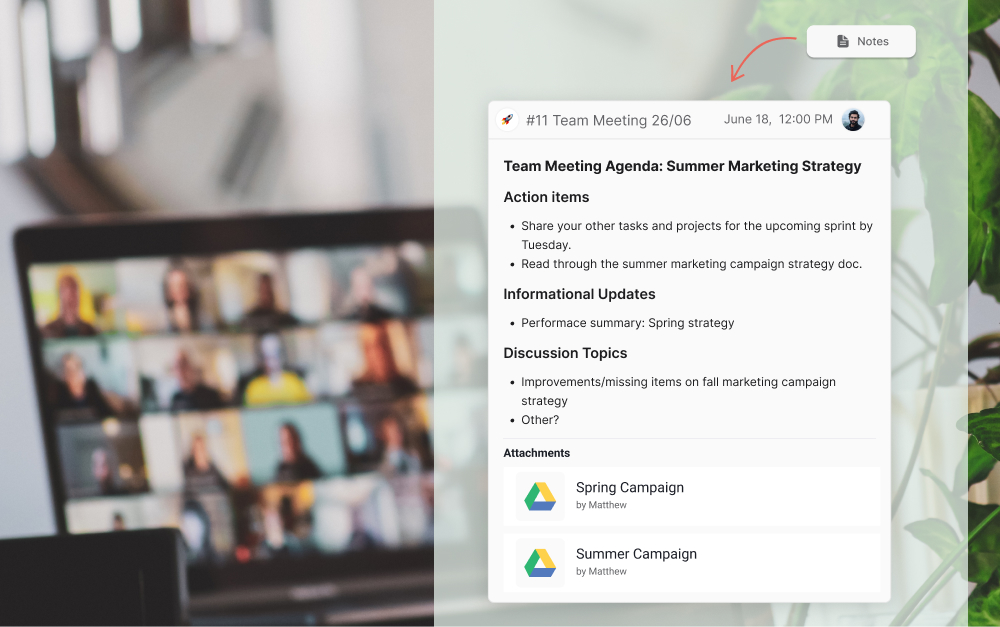
The account manager role is changing because AI is eating the bottom half of it. Writing status emails, assembling quarterly review decks, drafting meeting notes, transcribing calls, summarizing Slack threads. All of this is now partly or fully automated in most modern workspaces.
The right read is not "AI replaces account managers." It is "AI removes the parts of the job that never required a senior person, which makes the senior-person skills more valuable."
What AI handles now. Meeting notes and action-item extraction. Status email drafts from chat or task activity. quarterly review deck assembly from data. Quick-response client communication drafts. Weekly-summary roll-ups.
What AI cannot replace, and actually makes more valuable. Judgment about what matters versus what is noise. Strategic discovery: the questions that unlock next quarter's work. Reading the numbers: knowing when they do not support a "happy client" story. Selling the next chapter: painting the future the client cannot yet see. Relationship depth: trust built in live conversations.
Account managers who use AI to buy back time for the top-half skills pull ahead. The ones who resist AI or use it only for status summaries spend their saved hours on the same work they were always doing. The skill shift is knowing what the AI should be doing for you this quarter and what it should not touch.
Three anti-patterns to avoid
Most account manager careers plateau because of the same three mistakes. Watch for these, and the skills above start compounding faster.
| Anti-pattern | Why it happens | Fix |
|---|---|---|
| Weekly status calls become the whole job | The status update is a deliverable, not the role. "My client is happy" gets mistaken for "I am doing the job well." 80% status and 0% strategic planning means a senior project manager in a account manager title. | Shift the ratio on purpose. Block two hours a week with zero meetings for account planning. Treat that block as client time. |
| Owning the relationship but not the P&L | Most agency account managers were never taught financial literacy. They know the client, not the numbers. So a happy client can be unprofitable and nobody notices until renewal. | Ask your GM or finance lead for monthly reviews of gross margin, utilization, and realized versus contracted scope for every account you own. Know these cold. |
| Quarterly reviews that are status decks | Assembling a recap of deliverables and an analytics screenshot is easier than surfacing opportunities or debating outcomes with the client. So the "quarterly review" becomes a status meeting in a nicer deck. | Lead with client outcomes, not agency output. End the call with a signed one-page next-quarter plan. If the quarterly review does not produce that plan, it did not count. |
What we see account managers do well on Rock
We work closely with agencies, studios, and freelancers whose account managers run client retainers on Rock. The patterns among the ones who grow accounts are consistent.
They keep everything (relationship, P&L, and expansion notes) in one shared space per client. The freelance version of this pattern is the same idea applied to solo operators. The onboarding questionnaire stays alive as an editable note. The quarterly review prep doc, built from our meeting agenda templates, sits next to the task board. The client can see progress between calls, which means the quarterly review itself is about next quarter's plan, not catching the client up.
The account managers who do not grow accounts keep relationship stuff in email, P&L in spreadsheets, and expansion in "maybe next quarter" notes that nobody reads. By the time the quarterly review lands, they reconstruct context from three tools. The strategic skills get squeezed by the tool-juggling.
Rock combines chat, tasks, notes, and meetings in one workspace. For account managers, the relationship layer and the work layer become visible to each other. Strategic planning lives in the same place as delivery status, which means the account manager does not lose ten hours a week switching context.

The short version
Account manager skills in 2026 split into two groups. The retention skills (relationship management, client communication, responsiveness) protect the retainer. The growth skills (knowing the numbers, selling the next chapter, asking better questions, running strong quarterly reviews) grow the account. Most agencies train hard for the first group. The second is where the ROI is hiding.
Run the widget at the top to see which skill to level up first. The 8-skill table is the north star. For the onboarding side of the client lifecycle, pair this with our client onboarding checklist. The Premium tier is designed specifically for the onboarding-to-expansion handoff. For the quarterly review meeting mechanics, virtual meeting best practices covers the call-level playbook. Client management for agencies covers the retention practices that complete the picture.
Key account management gets easier when the relationship, the work, and the numbers all live in one shared space. See how marketing agencies run account management on Rock. Rock combines chat, tasks, notes, and meetings in one workspace. One flat price, unlimited users, clients included at no extra cost. Get started for free.