Marketing Project Management: A Practical Guide
According to Wrike's 2024 Impactful Work Report, marketing teams waste almost 13 hours a week on meetings and duplicative work. That works out to about $15,138 per knowledge worker per year. The number is bigger for agency teams running campaigns for several clients at once, because the duplicated work compounds across each project.
Marketing project management is the discipline that fixes this. For content teams specifically, this layer is described in the content marketing plan. For SEO-led work specifically, the SEO marketing plan is the upstream artifact; for social, the social media marketing plan sets the cadence. For the upstream decision of who works on what and for how many hours, see resource allocation. It is the execution layer underneath the annual marketing plan. It sits inside the broader marketing operations layer that runs across every client account. It is how you take ten campaigns, four stakeholders per campaign, and a team that ships across time zones, and turn them into something the team can actually run without burning out. This guide covers what marketing project management is, how the workflow runs, where it breaks in practice, and which frameworks actually fit marketing work.
If you run client campaigns or split a small team across multiple projects, the bottlenecks section below is where most of the practical value lives.

What Is Marketing Project Management?
Marketing project management is the practice of planning, running, and measuring marketing work as a system rather than a series of one-off campaigns. It defines how briefs get written, how work moves from idea to launch, who owns each stage, and how the team adapts when priorities shift. The goal is to ship marketing on time without exhausting the team or surprising the client.
It is broader than running a single campaign, and narrower than the wider business strategy. Project management for marketing sits between strategy and execution, and it is what most agencies and in-house marketing teams actually live in day to day. The dedicated role, the marketing project manager, owns the workflow itself rather than the creative strategy output.
"Agile marketing is not simply 'Agile applied to marketing,' but a full operating system designed for the ambiguity, creativity, and cross-functional challenges that modern marketing teams face." - Andrea Fryrear, AgileSherpas
That framing matters. Marketing work is not a software feature with a clear definition of done. Briefs change, copy gets rewritten in review, design needs three rounds, the client moves the launch. Treating marketing PM as generic project management with marketing words misses the point. The practices are the same in spirit; the friction is different.
The Marketing PM Workflow
Most marketing work moves through five phases. Names vary across teams. The sequence does not.
- Intake A request lands. Maybe it is a new campaign brief from a client, a paid ads test from the strategy lead, a content piece from editorial. The intake step turns it into a defined piece of work with an owner, a deadline, and a clear scope. Skipping intake is the most common cause of "wait, who asked for this?"
- Planning The team breaks the work into tasks, assigns owners, schedules dependencies. For a campaign, this includes the creative brief, the asset list, the channel plan, the launch date. For ongoing retainer work, planning is lighter and runs continuously.
- Production The work happens. Copy, design, dev, video, paid setup. This phase is where the most time is spent and where the most invisible context-switching happens, especially when team members are split across multiple clients.
- Review Internal QA first, then client or stakeholder approval. This is where most marketing campaigns slow down, because reviewers have other priorities and approvals are sequential.
- Launch and measure The work goes live. Metrics get tracked against the goal. Lessons feed back into the next campaign through a retrospective or postmortem, which most teams skip even when they know they should not.
"The primary hallmark of a successful publisher is consistency, both in terms of quality and delivery." - Joe Pulizzi, Content Marketing Institute
Pulizzi was writing about content marketing, but the point applies wider. Marketing project management is the machinery that lets a team be consistent. Without the machinery, output depends on whoever is least busy that week. With it, output depends on the workflow.
Where Marketing PM Actually Breaks
Every team that picks up marketing project management hits the same five bottlenecks. The five-phase workflow is the bones; this is where the meat of the work happens.
Slow approvals
The 2026 State of Agile Marketing Report found that 92% of marketers report collaboration issues with other teams. Among non-Agile teams, 46% point to slow approvals as the single biggest barrier. Approvals are the bottleneck almost every other bottleneck flows through.
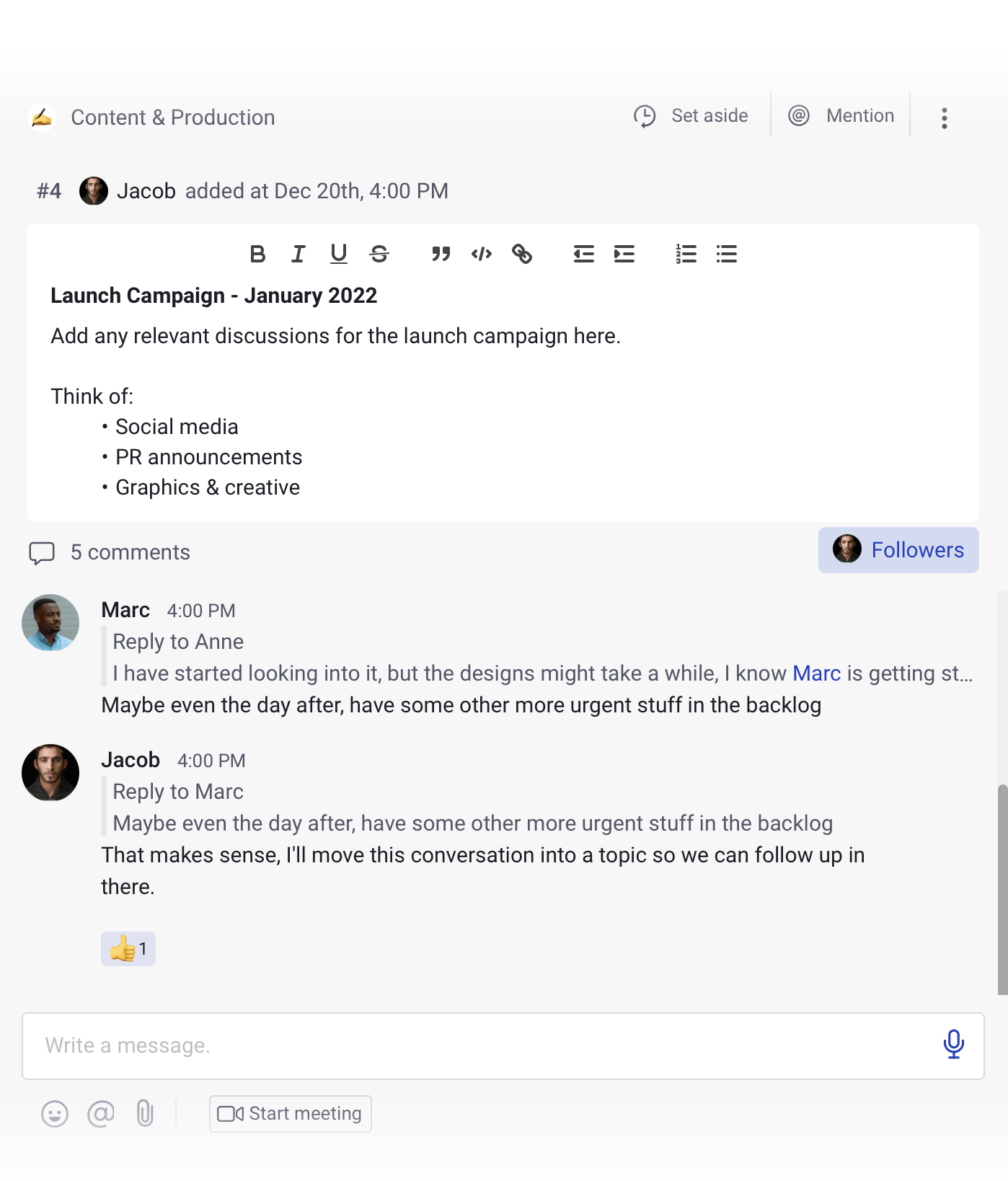
The fix is rarely "ask the client to be faster." Clients are busy. The fix is structural: name the smallest possible reviewer set per campaign, define what they are reviewing for (copy versus brand alignment versus legal), and make the review asynchronous. A board where every card has a single named reviewer and a 24-hour SLA outperforms a weekly status meeting where everything piles up.
The cleanest version of this is a Topic thread per approval: tag the reviewer, attach the deliverable, write the 24-hour SLA into the title. The reviewer reads async and comments inline.
Capacity mismatch across campaigns
For agencies, this is the bottleneck that gets the least attention and causes the most damage. One designer is on five clients. The account manager is juggling eight retainers. The strategist split her time across three pitches last week. Generic marketing PM advice assumes a dedicated team on one campaign. Real marketing teams almost never look like that.
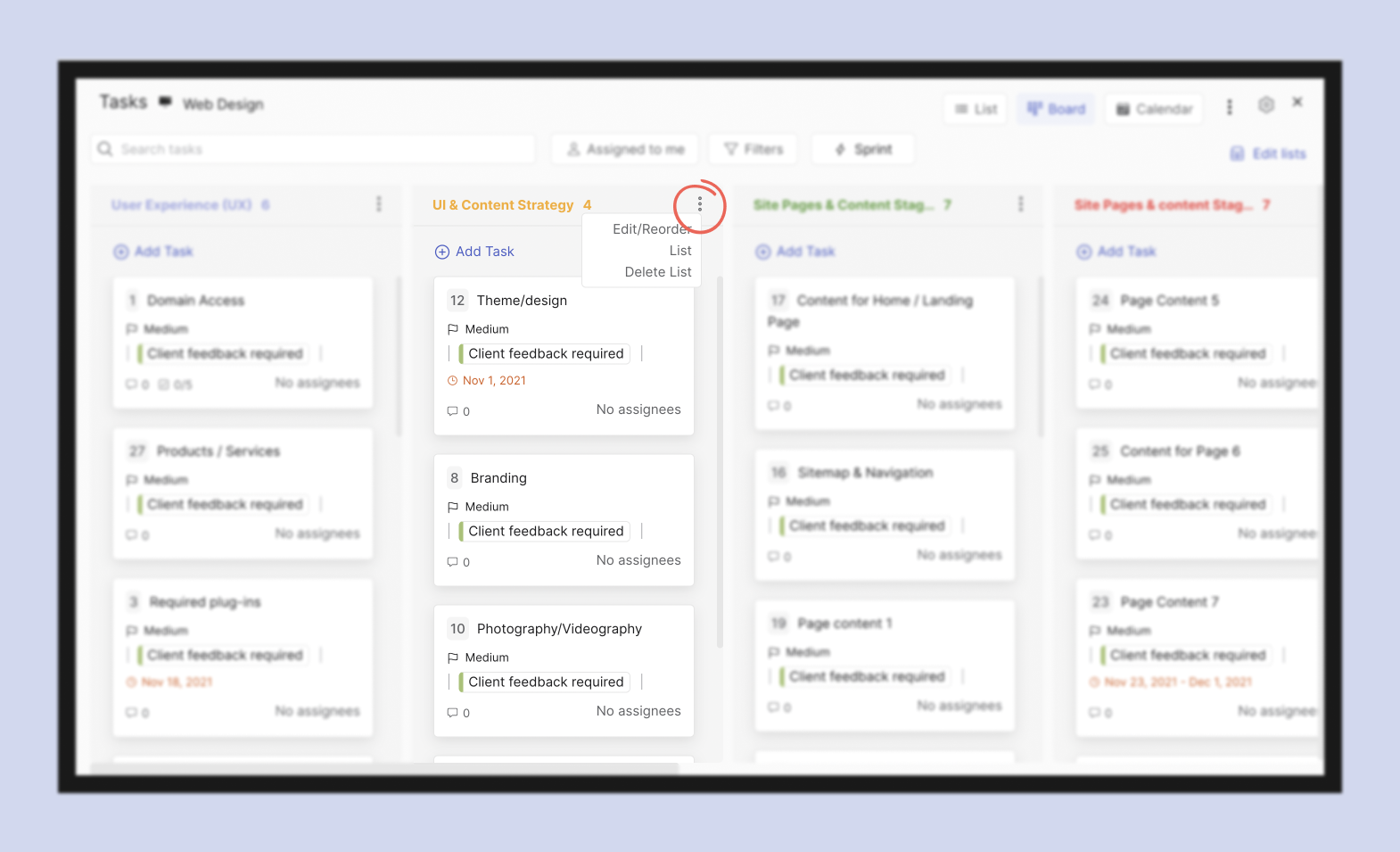
AgileSherpas data shows 40% of Agile marketers cite capacity mismatch as their top operational barrier. Solving it requires visibility (you cannot manage what you cannot see) and explicit Work-In-Progress limits per person, not per project. If your designer is at three active campaigns, the fourth waits in the backlog. This is where Kanban thinking pays off, with explicit Work-In-Progress limits forcing the capacity conversation up front.
Most teams write the WIP limit into the column name on their Board view (for example "In Progress (3)") and treat it as a social contract rather than a software lock.
Outdated planning cadence
Annual marketing plans were always a fiction. Today they are a liability. The same AgileSherpas data shows 89% of Agile marketers update their plans at least monthly, compared to 66% of non-Agile teams. The Agile group is also 23 points more likely to feel that planning drives important work (82% versus 59%).
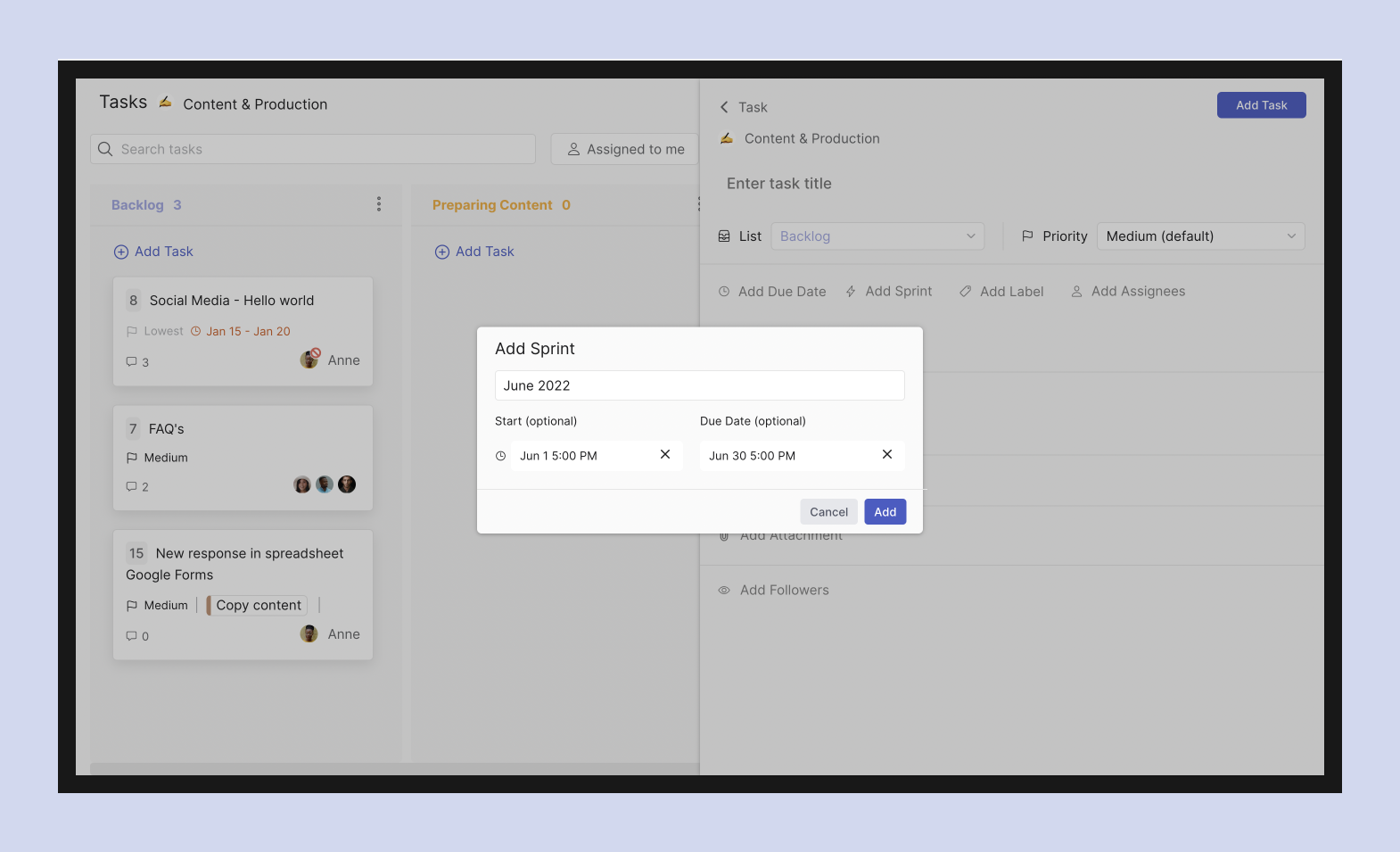
The takeaway is not "throw away the annual plan." It is "treat the annual plan as direction, not commitment, and replan monthly." Quarterly OKRs plus monthly sprint planning sessions for the campaign work give a working baseline. Anything longer drifts.
A working baseline for marketing teams: a Sprint every two to four weeks for the campaign work, with the quarterly direction kept in a shared note above the board.
Scope creep on creative work
Creative scope is harder to define than software scope. "One landing page" can mean five sections or twenty. "A social campaign" can mean six posts or sixty. Without a clear scope agreement up front, every revision feels reasonable in isolation and the project quietly doubles in size.
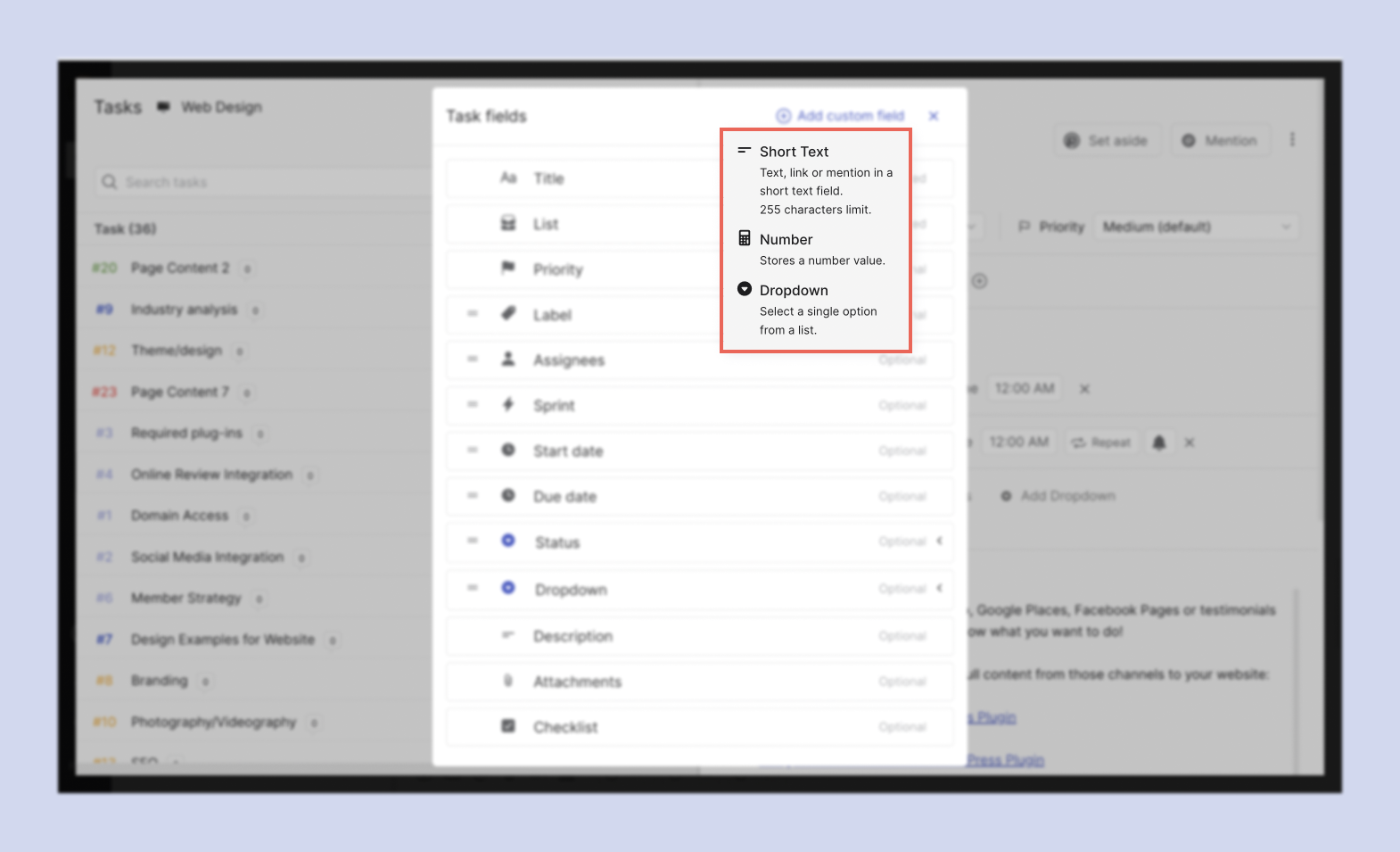
The fix is a written scope statement per project that names what is in, what is out, and what counts as a change request. Our scope of work template covers the format. The trick is not the template though; it is using it as the reference when revisions arrive, instead of saying yes by default.
Tag every change request with a Custom Field marking it scope-in or scope-out (Custom Fields are on the Unlimited plan; on free, a label does the same job). The scope conversation then happens at the task level, before the work starts.
Lack of cross-team visibility
The marketing team knows what they are working on. Sales does not. Strategy does not. The client has a vague sense from last week's status email. Each blind spot creates rework: sales pitches a campaign that is not ready, strategy plans for a launch the team cannot hit, the client requests something already in flight.
Visibility is solved by one shared board where every active piece of work lives, including external collaborators. Status emails are not a substitute. A status email reflects the board at one moment; the board reflects reality.
One shared space per project including the team and the client via cross-org sharing, with no per-seat cost for adding people outside your organization.

Frameworks That Work for Marketing
You do not need a single project management framework for all marketing work. The honest pattern most teams settle into is a hybrid: different frameworks for different types of work, run on the same board.
Kanban for retainers and continuous flow. Ongoing SEO, social posting, email, paid ads optimization. Work arrives unpredictably and never really ends. Kanban handles this without sprint commitments. Set a Work-In-Progress limit per stage and per person, pull new work as capacity opens.
Sprints for campaigns and launches. A brand campaign with a launch date, a website redesign, a content series, a paid ads test with fixed budget. Agile sprints give the cadence and the forcing function. Two-week sprints are the default for marketing teams; one-week sprints work for fast-moving editorial teams.
Hybrid for the realistic agency stack. Most agencies run Kanban on retainer work and Sprints on fixed-scope projects, all on one team. Same workspace, same people, different disciplines per project type. The risk is taking only the visible parts of each framework (boards, sprints) and skipping the discipline (WIP limits, sprint goals). Pick the elements that solve actual problems, not the ones that sound good in a proposal.
Tools You Need
The tooling is less interesting than the workflow. Any setup needs four things: a board for the work in flight, a way to discuss the work next to the work, a place for shared documentation (briefs, retros, scopes), and a way to bring clients and freelancers in without paying per seat for them.
Stack-fit matters more than feature count. A simple tool the team actually updates beats a powerful tool nobody touches. The main task management options all support a board view; the differences show up in pricing, client access, and integrated chat.
What We Do at Rock
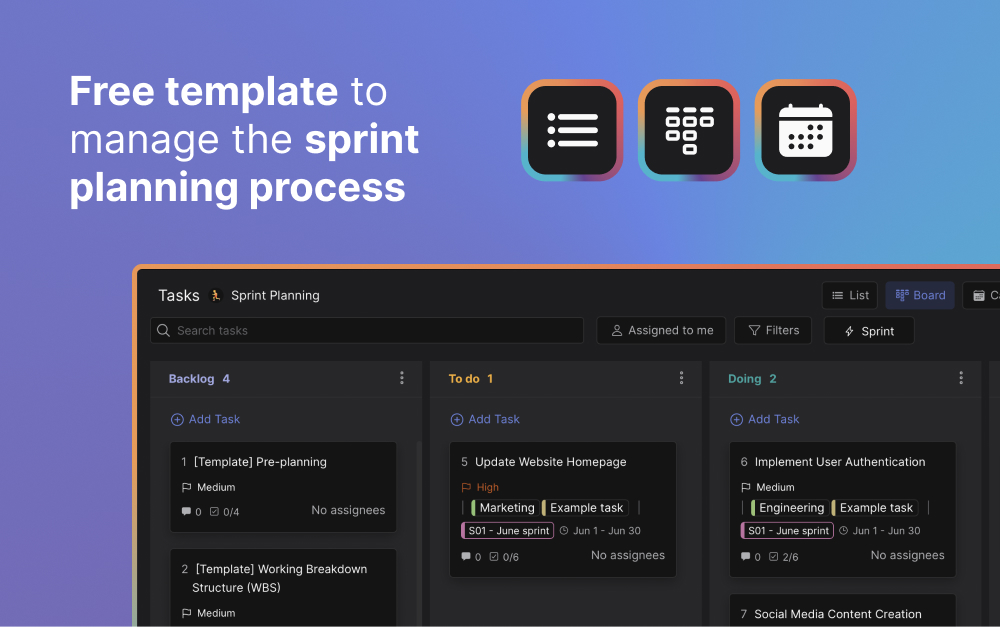
We run a hybrid model internally. Each project has a single space holding the board, the chat, the briefs, and the files. Kanban for ongoing flow, weekly sprints for campaign work, async standups via Topics (our threaded chat) so we are not pinning everyone to a meeting across time zones. Monthly retrospective in a shared note.
For agency clients we observe on Rock, the pattern that works is the same with one addition: clients and freelancers join the project space directly via cross-org sharing, so the board is the source of truth for everyone. No status email, no parallel client tool, no per-seat charge for the client to see the board. Visibility solved by sharing, not by reporting.
The honest limitation: we do not auto-enforce WIP limits. Teams write the limit into the column name (for example "In Progress (3)") and respect it as a social contract. That works for teams under 20. Bigger teams probably need software-enforced limits. Pair the workflow with the right marketing KPIs so you can tell whether the system is actually shipping work, not just tracking it.
Final Thoughts
Marketing project management is not a separate discipline you bolt onto a marketing team. It is the structure that lets a marketing team ship work consistently. Lifecycle gives you the bones. The five bottlenecks above are where the actual day-to-day battles happen, and where most generic PM advice runs out.
"Because its purpose is to create a customer, the business enterprise has two, and only two, basic functions: marketing and innovation." - Peter Drucker, The Practice of Management, 1954
Drucker wrote that seventy years ago, and it still sets the stakes. Marketing is not a support function. It is one of the two things a business does. Treating it like an afterthought, run on whoever is least busy that day, is a strategic error before it is an operational one. Marketing project management is the operational answer to that strategic point.
Start with the bottleneck that is hurting most this quarter. Slow approvals, capacity, planning cadence, scope, or visibility. Fix one, run for a month, fix the next. The teams that improve fastest are not the ones that adopt the most frameworks. They are the ones that pick the right bottleneck and actually solve it before moving on.
Run your marketing projects in one place. Rock combines chat, tasks, and notes in one workspace. One flat price, unlimited users including clients and freelancers. Get started for free.