How to Have a Productive Morning Routine
A 2025 Kantar survey covered by CNBC found that 90 percent of US adults say their morning routine sets the tone for their whole day. In the same study, 92 percent of people with a routine felt productive, versus 79 percent of people without one. The problem is that most people then spend less than 30 minutes on the routine that is supposed to carry them through the next 10 hours.
You do not need a 5 AM wake-up. You do not need cold plunges, matcha lattes, or a HIIT workout before sunrise. You need a productive morning routine that matches your chronotype, uses the cortisol window correctly, and protects at least one block of focused time before the meetings start.
This guide covers what actually works for how to have a productive morning. Chronotype-aware schedules, the science behind morning deep work, and a builder that turns your wake time and work rhythm into a specific routine you can copy. No affirmations in front of a mirror. No cottage-cheese-and-salmon breakfast. Just the morning routine tips that have real research behind them.
Most morning routine ideas online fail for the same reason: they copy someone else's schedule and ignore the person trying to follow it. A productive morning routine for a lark does not look like a productive morning routine for an owl. A routine with 2 hours before work looks nothing like one with 30 minutes. So instead of "10 habits every successful person does," this article is structured around how to figure out what fits you, and then build it.
Build Your Morning Routine in 30 Seconds
Different chronotypes, different schedules, different challenges. The builder below takes four questions and returns a morning block matched to your biology.
Build your productive morning routine
Answer 4 questions. Get a schedule that fits your chronotype, not someone else's 5 AM club.
1. What time do you naturally wake up on a free day?
2. When do you do your hardest thinking?
3. How much time do you have before work starts?
4. What is your biggest morning challenge?
Start over
What Makes a Morning Actually Productive
Two biological facts matter more than any individual habit.
Cortisol peaks in the first hour after waking. That peak is what makes you alert and ready for demanding work. Early caffeine blunts the peak, which is why Stanford neurobiologist Andrew Huberman recommends delaying coffee by 90 to 120 minutes. Your prefrontal cortex, the part of the brain that handles planning and focus, runs hottest in that same window. Research linked in a 2022 PMC review of morning behavior change puts decision-making quality at its daily high in those first two to three hours.
Focus runs in 90-minute cycles. This is the ultradian rhythm. Cal Newport, a Georgetown computer science professor and the author of Deep Work, builds his schedule around it. A single 90-minute morning block of uninterrupted concentration on a hard task produces more real output than four hours of scattered work after lunch.
"Three to four hours a day, five days a week, of uninterrupted and carefully directed concentration, it turns out, can produce a lot of valuable output." - Cal Newport, Georgetown University
A productive morning routine is a wrapper around that block. Everything else, the walk, the water, the plan for the day, exists to protect the block and to put you into it with as much cognitive capacity as possible.

The 5 AM Myth: Chronotype Is What Matters
The loudest voices in the productivity world all wake at 5 AM. That is a sample, not a rule. The science of chronobiology says something different. The chronotype you were born with sets when your body wants to sleep, wake, and think hardest. Fighting it with an alarm clock usually costs more than it buys.
Till Roenneberg, a chronobiologist at Ludwig-Maximilian University in Munich, spent two decades studying real sleep patterns across populations. He coined the term "social jet lag" for the gap between when your body wants to sleep and when society expects you to. The research is clear: forcing everyone onto a lark schedule leaves night owls chronically underperforming. The trick is to match the routine to the chronotype, not the other way around.
Most people fall into one of three chronotypes. Larks wake early and peak by late morning. The middle type, which covers the biggest slice of the population, wakes between 6:30 and 8 AM and peaks between 9 AM and noon. Owls naturally wake after 8 AM and do their best thinking in the afternoon or evening.
| Chronotype | Natural wake | Peak cognitive window | Best morning move |
|---|---|---|---|
| Lark (morning type) | Before 6:30 AM | 7 AM to 11 AM | Put the hardest deep work in the first 90 minutes, before caffeine. |
| Middle (most people) | 6:30 to 8 AM | 9 AM to 12 PM | One 60 to 90 minute deep work block between wake-up ramp and first meeting. |
| Owl (evening type) | After 8 AM | 4 PM to 8 PM | Use morning for sunlight, movement, and admin. Schedule deep work for mid-afternoon or evening. |
If you are a lark, your morning routine should end with a 45 to 60 minute deep work block before breakfast. If you are an owl, your morning is not for deep work at all. Use it for sunlight, movement, and light admin, and block your real focus window for later in the day. Forcing a 7 AM strategy session on an owl is throwing away their best four hours.
The practical test for your own chronotype is simple: on a full week of vacation, with no alarm and no social plans, when do you naturally wake up, and when do you feel sharpest? That pattern is your biology. A morning routine for productivity that fights it will feel like a daily battle, and you will lose most days. A routine that works with it will feel less like a routine and more like a rhythm. How to be productive in the morning is mostly about how honest you are about which of the three chronotypes you actually are.
Seven Morning Habits the Science Actually Backs
Most productive morning routine lists are stacked with everything from gratitude journaling to cold showers to affirmations. The seven below are the ones with the strongest evidence behind them. Pick two or three at a time, not all seven. The reason is simple: there is a difference between knowing what should be in a productive morning routine and building something you will actually do on a groggy Wednesday when you slept six hours.
| Habit | What the science says | How to apply it |
|---|---|---|
| Get sunlight in the first 10 minutes | Morning bright light sets circadian rhythm and sharpens the cortisol peak that drives daytime alertness. | Step outside for 5 to 10 minutes, or sit by a south-facing window. Cloudy days still work, it is the lux that matters. |
| Hydrate before caffeine | Overnight you lose fluid and electrolytes. Mild dehydration measurably reduces focus and mood. | 500 ml of water within 15 minutes of waking. Coffee can wait. |
| Delay caffeine 90 to 120 minutes | Early caffeine blunts the natural cortisol peak. Delaying lets your body do its work first, then caffeine compounds on top. | First coffee 90 minutes after wake-up. Yes, it is annoying on day one. |
| Move for 10 to 20 minutes | Morning movement raises core temperature and increases blood flow to the prefrontal cortex, the decision-making part of the brain. | Walk, stretch, bodyweight. Gym-level intensity is optional. Consistency wins over intensity. |
| Plan the top 3 tasks for the day | Writing down your top priorities reduces task-switching cost and cuts decision fatigue during the day. | Two to five minutes with a pen or a notes app. Pick three things, not ten. |
| Protect a 60 to 90 minute deep work block | Focus works in ultradian rhythm cycles of roughly 90 minutes. Uninterrupted morning blocks produce the most output. | Block it on the calendar before meetings get scheduled. Phone in another room. One task only. |
| Keep the first hour meeting-free | Research on meeting-free mornings links them to measurable gains in reported productivity and lower self-reported stress. | Move standups and status meetings to after 10 AM. Use the first hour for doing, not talking. |
A note on habit formation. A widely cited University College London study by Lally et al., published in the European Journal of Social Psychology, found that new habits take an average of 66 days to become automatic, with a range of 18 to 254 days. That is the single most important piece of context when you are trying to change a routine. Stacking seven new habits on a Monday guarantees at least four collapse within a month. Add one habit. Let it stick for three weeks. Then add the next. A small routine that actually runs beats an ambitious routine that collapses by Thursday, every time.
The other reason to pick two or three habits, not all seven, is that morning time is fixed. If you only have 45 minutes before work, you cannot do sunlight exposure, hydration, a 20 minute walk, a 60 minute deep work block, and breakfast. You have to choose. The builder above makes that choice based on your chronotype and time budget. The table above tells you what the options are. Between them you should end up with a routine that fits your life, not someone else's.
"Use the first 90 minutes of your day for cognitive work, and get bright light in your eyes first." - Andrew Huberman, Stanford University
Common Morning Routine Mistakes
The habits above matter, but most productive morning routines break on the mistakes below, not on missing ingredients. These are six patterns we see over and over, drawn from working with teams in different time zones and different life situations. If your current morning is not working, it is almost always one of these, not a missing cold shower.
| Mistake | Why it fails | Fix |
|---|---|---|
| Copying a famous person's 5 AM routine | Their chronotype is probably not yours. Forcing an early wake against your biology costs more than it buys. | Start by observing your own natural wake time on a free day. Build the routine around that, not against it. |
| Checking your phone before you get out of bed | The dopamine loop hijacks your morning before you have even had water. Focus is harder to recover once broken. | Charge the phone in another room. Buy a basic alarm clock if needed. |
| Coffee the second you wake up | Caffeine at wake-up blunts the natural cortisol peak and leaves you more tired mid-morning, not less. | Water first. First coffee about 90 minutes after waking. |
| Starting with email or Slack | Your morning focus gets spent reacting to other people's priorities. The day is set before you choose it. | First 45 minutes is for your work, not theirs. Open email after the first deep work block. |
| Trying to stack 10 habits | Research shows habits take weeks to stick. Stacking too many at once guarantees at least half collapse within a month. | Add one habit at a time. Give it three weeks before adding the next. |
| Treating the morning as fixed | A rigid routine breaks the first travel day, sick day, or off week. Then the whole system falls apart. | Define a minimum version (water + light + plan the day) you can hit in 10 minutes on bad days. |
What We Do at Rock
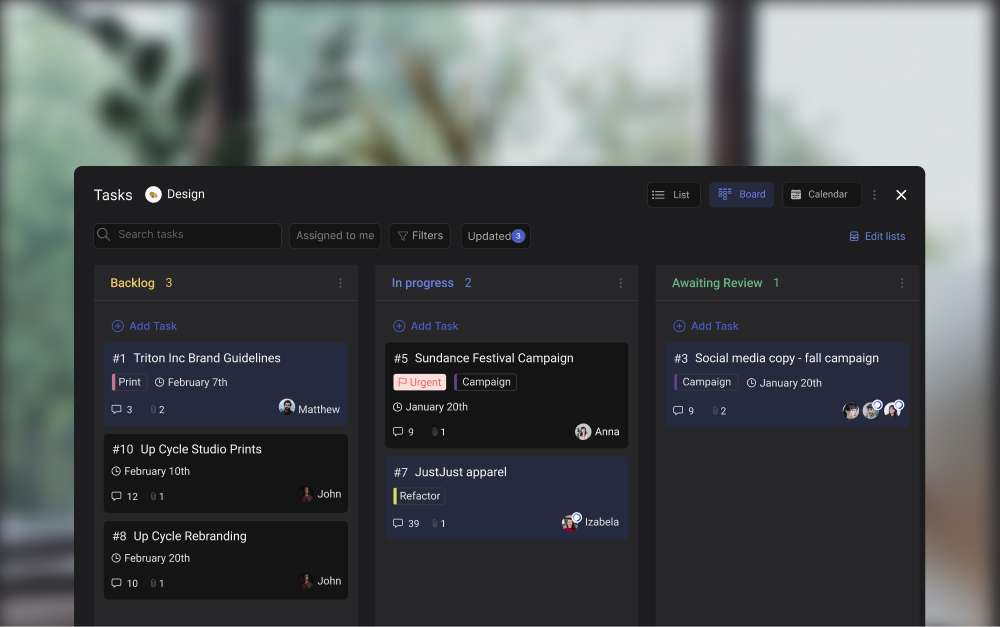
Honestly, we do not enforce a morning routine at Rock. Our team is small and fully async across several time zones. One person is already deep in the day by the time another person wakes up. There is no shared "9 AM team huddle" because there is no 9 AM that works for everyone. What we share is a set of principles about when work happens, not a shared clock.
Each person picks their top three tasks the night before or first thing in the morning and posts them in a shared Topic. Deep work blocks go on calendars. Meetings only get booked in overlap hours, never in someone's morning focus window. Cross-time-zone collaboration sits in asynchronous work patterns, not in real-time calls. A chat blocker becomes a task comment, so a long morning block is never interrupted by a question that could have waited 40 minutes. The daily standup, if a team needs one, happens async in writing, which means it slots into each person's morning without breaking their focus window.
The point is not that everyone should work async. The point is that one-size-fits-all routines lose to routines built around when each person actually thinks best. A small team with six different chronotypes and three time zones cannot run a single morning schedule. Each person runs their own, and the platform carries the coordination.

When to Skip the Morning Routine Entirely
Some mornings a routine is the wrong answer. Three cases where skipping it is the productive move.
Sick or under-slept. If you got five hours of sleep, the best morning move is more sleep or an easier day, not a 5 AM wake-up and deep work. Fighting biology here compounds the damage into the next day.
Travel or time-zone shift. A routine built for your home time zone will not fit a new one. Run a minimum version (water, light, plan the top three) and let the full routine come back when the schedule is stable.
Your current routine is hurting you. If you are exhausted, resentful, or skipping the routine three days a week, the fix is usually to cut it in half, not add more. Ten honest minutes every day beats 90 aspirational minutes that collapse by Wednesday.
The goal of a productive morning routine is to put you into the day with focus and energy. If a given morning's routine is not doing that, the routine is wrong that morning. Productive morning routines are tools, not identities. Use yours when it helps. Skip it when it does not. And adjust it as your life changes, because the version of you who designed the current routine is not the version of you living it three months later. For more on building sustainable work habits around your routine, see our guides on staying organized at work and improving productivity in an organization.
The best test of any morning routine is not whether it looks good on Instagram. It is whether, four weeks from now, you are still running it on Tuesdays and Thursdays as well as Mondays. A routine that works is one you barely notice because it has become how you start the day. Everything else is motion without outcome.
A productive morning routine is only as useful as the tools that keep the rest of the day aligned to it. Rock combines chat, tasks, and notes in one workspace. One flat price, unlimited users. Get started for free.